Glimpse: Why We Invested

At Impact Engine, one of our four impact areas of focus is education. Time and time again, we have heard from companies that the best edtech products have to fight against mediocre ones because of the relationship-based nature of sales in many school districts. The reality underlying that frustration is that administrators haven’t had great tools to foster informed decision making. Traditional achievement systems simply present outcomes without capturing the data in the context of what educators or programs did and how effective their actions were at impacting student outcomes. At the same time, traditional financial systems have lacked the correlations between expenditures and student achievement. As a result, districts have struggled to align their spending on products and programs that produce the best student outcomes.

Solution

Our most recent investment in Glimpse seeks to address that challenge. Glimpse has developed a data platform that connects budgeting systems with data on student outcomes, enabling districts and schools to calculate an eROI, or education return on investment. What drew us to this investment was the potential for systems change within education. By providing data to districts, Glimpse enables decision makers to include impact in their purchase decisions, and it also helps them ask the right questions when they see discrepancies in performance within or across schools. The US spent $12 billion on edtech alone in 2017, and that figure is substantially higher when you consider spending on programs and curriculum. We believe Glimpse has the potential to meaningfully impact how those dollars are spent.

Why We Invested

In addition to the compelling market opportunity and potential for impact, we were impressed by the team. The company is led by co-founders Nicole Pezant and Adam Pearson, both experienced edtech entrepreneurs who previously worked together at Chalkable. They’ve demonstrated an ability to grow and scale (and exit) companies in this space, and we are excited to work with them. Despite a small team size, the company had already achieved meaningful traction by the time we invested.

Impact

While Glimpse is able to infer correlations, they are not utilizing randomized control trials (RCTs) and do not purport to evaluate causality. However, they do provide a more granular level of detail that helps administrators connect the dots between spending and outcomes. To that end, the impact metrics that we are tracking for the company include the spending efficiency or eROI (the % of spend that is driving student gains); the number of districts using Glimpse, including a breakdown of Title 1 schools and the number of students within each district; and improvements in student performance.

Our Investment

We invested in the seed round that Glimpse raised earlier this summer which will enable the company to invest in product, grow sales, and demonstrate improvement in spending efficiency at customers. We look forward to supporting the company alongside co-investors Fresco CapitalGovtech Fund and GSV AcceleraTE.

Fixer: Why We Invested

The United States is currently faced with an alarming labor shortage of skilled workers in the trades. Over 60% of skilled tradesmen are over the age of 44, and the industry will struggle to fill these roles as younger generations continue to seek employment in other industries. 78% of firms report having difficulty finding qualified workers to fill these types of positions. The construction industry lost 1.5 million workers during the Great Recession. As a result, skilled trade jobs have consistently ranked as the most difficult position to fill since 2010, with 62% of companies struggling to fill these positions.

Solution

Fixer offers a compelling, scalable solution to address this labor gap by providing a career entry point and development for women and minorities while also delivering a superior customer experience. Their on-demand home repair service features transparent pricing as well as convenient online booking and payment. The company identifies overlooked talent and develops their skills with progressive training in customer service, home repair, and maintenance. “Fixers” (the employees of Fixer who provide handyperson services) have access to a variety of learning opportunities, ranging from informal sessions with fellow workers, to online courses and classroom-based certification training provided by the company. The curriculum also includes work in the field with mentors in order to gain hands-on experience. Ultimately, customers benefit from Fixer’s intensive training program in the form of impeccable service and high quality of work.

Why We Invested

Fixer boasts an extremely strong management team. The company was founded by Mike Evans (co-founder and former COO of GrubHub) and a handful of ex-GrubHub product, operations, engineering and marketing veterans who have a proven track record of success. Also, Fixer is seizing a large, attractive market opportunity by vying to become a nationwide, customer-service oriented brand for home maintenance and repair. In addition to their impressive management team and the large market opportunity, we are also excited about the potential for impact at scale. Since there is a limited supply of experienced tradesmen, Fixer’s focus on recruiting underrepresented populations to join the trades as novice fixers becomes a clear competitive advantage for the company.

Impact

Fixer’s goal is to bring more people into the trades, giving them measurable and valuable skills, which will provide them greater economic security and mobility, particularly for those currently earning less than $50,000 per year, as well as for underrepresented populations such as women and minorities. Typically, we invest in products where the customer is “buying the impact” (e.g. a school administrator wants better education outcomes), so that the impact is directly driven by sales. In Fixer’s case, the customer is buying a convenient service, but because there is a shortage of skilled handy-people, the social impact is a key requirement for Fixer to grow its business (i.e. they must successfully train people to provide a great service).

One of the biggest variables on impact will be who those employees are and whether the company is hiring the underserved. The leadership team at Fixer has a strong commitment to impact, and to reflect that commitment, the company registered as a public benefit corporation. As the training gets underway, we plan to track the number and type of new practical skills acquired by Fixers, as well as the demographics of those entering or re-entering the trades.

Our Investment

We invested in the seed round that Fixer raised in May, which will allow them to continue to grow the business, to refine their model, to build out the curriculum for their training academy, and to hire their first group of novice fixers. We look forward to working with Mike and the rest of the Fixer team as they continue to grow the business alongside co-investors Founder Collective and Hyde Park Venture Partners.


The Rise of Impact Seed Funds

By Tasha Seitz

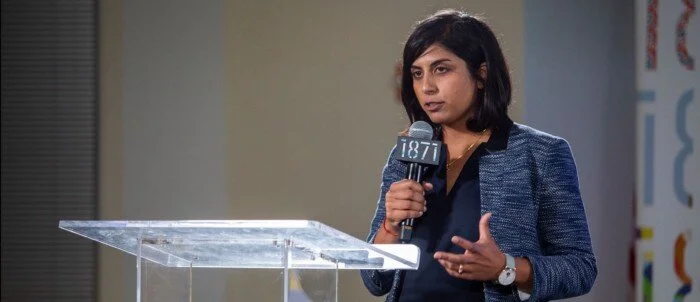
Last month, I had the pleasure of attending SOCAP (Social Capital Markets), the world’s largest conference on social enterprise and impact investing, at the Fort Mason Center in San Francisco, California. As a veteran attendee (this is my sixth SOCAP conference), I am always energized to be around smart people who are passionate about the potential of the intersection of impact and markets. At the conference, I spoke on a panel called “The Rise of Impact Seed Funds” with Wes Selke from Better Ventures, Shauntel Poulson from Reach Capital, Brian Dixon from Kapor Capital and Julie Lein from the Urban Innovation Fund. We discussed the evolution of seed-stage funds and talked about specific investment strategies, and how our focus on impact boosts performance. Below, I’ve recapped some of the key takeaways from our panel discussion (feel free to check out a video recording here).

Defining and measuring impact as an impact fund

Social impact is a loaded word and means different things to different people. While each fund on the panel considers themselves an impact fund, we each define it very differently. Brian Dixon from Kapor Capital shared that, “when we’re making an investment we’re not only thinking about whether this investment will get us a 3x return of the fund, but also how does this actually make a difference.” At Reach Capital, “we invest in missionaries, not mercenaries” said Shauntel Poulson. When it comes to impact, they focus on three things: a user base that targets underserved and under-resourced populations, usage penetration in terms of depth of usage and user satisfaction, and long-term improvement in student outcomes and achievement. The Urban Innovation Fund, Julie Lein noted, is a market rate-driven fund with an investment thesis that is impact-driven, mission-driven and world positive. “More and more we’re moving towards a place where you don’t have to be concessionary when you’re achieving impact goals” said Lein. At Impact Engine, being impact-focused is part of our brand. We look for entrepreneurs that are impact-motivated. For each company we invest in, we work with the entrepreneur to create a logic model that links the product to the positive impact outcomes that product can create. It’s also important on the investor side as well. We bring in investors that are impact-motivated and provide opportunities to deepen their understanding and portfolio of impact investing.

What seed-stage impact funds are looking for

At the seed-stage, many entrepreneurs find themselves in a “chicken and egg” situation: they need the capital to build the product, but they need the product to raise the capital. Even at an early stage, there are many signs of success an entrepreneur can demonstrate, like initial traction and potential market penetration. Each fund shared insight about what they look for in a company that signals they are ready to invest. A strong, driven team that sees a larger vision and can execute is key, especially at the earliest stages. “We believe that the right team will figure out the right market, and if it’s not the right market, they’ll pivot to a better market” said Poulson. At Impact Engine, we believe that an “A team” with a “B product or market” is better than an “A product/market” with “B team.” We look for entrepreneurs who are targeting large markets and market adjacencies where there’s big opportunity. We also ask: are they a GSD (get shit done) entrepreneur? Have they hustled, gotten something built, tested it, and gotten in front of customers? As an entrepreneur, you always need more money to make your product more robust and scalable, but the more scrappy you can be, the more impressed I am! As Lein remarked, “show a willingness to get things done immediately. There is power in being passionate, scrappy and tenacious!”

The evolution of seed funds

Though accelerators and incubators first addressed the dearth of funding for mission-oriented companies, producing a cohort of early-stage startups searching for seed funding, many of these accelerators have transformed into seed funds as the field has matured. As Dixon says, “when it comes to accelerators and funds, there’s been a natural progression over time”. For example, as smaller seed-stage funds become successful, they raise larger subsequent funds with bigger check sizes and become better suited to invest in companies raising larger rounds. But recently, there’s been a rise in micro VCs, seed capital and pre-seed rounds, which is a great thing for entrepreneurs. As Poulson described, “today’s seed round is yesterday’s series A and today’s pre-seed round is yesterday’s seed round.” In today’s landscape, seed rounds can be upwards of $5M and companies can have multiple seed rounds.

The dos and don’ts of fundraising

The group shared lots of tips for entrepreneurs that are fundraising. The most important? Know how much you’re raising. When it comes to rounds, the landscape for seed stage companies has shifted towards SAFEs or convertible notes. While impact funds are certainly flexible and open-minded to both notes and priced rounds, entrepreneurs should understand the pros & cons of their funding choices. Notes can be less expensive and great if you want to be scrappy, but a priced model can be easier and clearer in terms of determining ownership percentage. It’s also important to know why you’re fundraising and why you want to work with a specific fund. Demonstrate a strong team, have a most viable product and customers to show, and have a clear vision of where you’re going. Be able to articulate your impact story.

Portfolio construction & follow-on investments

While each fund has a unique philosophy on portfolio construction, they all reflect the evolving landscape of seed funds. Some funds used to steer clear of follow-on investments, but now they are more open to reserve capital for companies in their portfolio if the company meets certain milestones. Poulson noted, “today, half of our capital is for follow-on investments and the other half is for new seed stage companies”. At Impact Engine, we have a similar strategy: we strive to invest our reserved capital in portfolio companies that are doing well, where we see potential for great returns and great impact.

The landscape for seed-stage funds continues to evolve, and each fund is always learning, growing, and evolving its strategy. It was a pleasure to share my experiences with Impact Engine at SOCAP. The conference is always an excellent reminder just how much this movement has grown over the years, and I look forward to attending the SOCAP conference for many years to come!

Did you like this post? Sign up for our newsletter and we’ll send you the latest impact investing and Impact Engine news each month.