


At Impact Engine's Annual General Meeting in June, our CIO Priya Parrish sat down with three of our fund managers for a candid conversation about where they're finding opportunity in today's investing landscape. The panel featured Allison Baum Gates, General Partner at SemperVirens Venture Capital, Anup Jacob, Managing Partner at Activate Capital, and Tony Miller, Managing Partner at Excolere Equity Partners. The conversation covered several themes, including the future of AI, the changing regulatory environment and their thoughts on the “impact” investing label.
AI as Infrastructure and Services
All three panelists pointed to AI as a defining force in their current portfolios, but each is approaching it differently.
Anup described Activate Capital's focus on the physical infrastructure powering AI, particularly energy. "The constraint isn't land, it's not engineers, it's not chips, it's not capital — it's energy," he said, pointing to the massive data center buildout underway and the demand for clean power to fuel it. Activate is investing in companies that enable energy efficient data centers, the kind of infrastructure that major cloud and AI players are demanding as they pursue net-zero commitments. This includes Activate’s investments in Crusoe and XNRGY.

Allison, meanwhile, is focused on what she calls "AI-native services," companies built from the ground up with AI at the core, rather than tacking it onto legacy workflows. "About 80% of healthcare spend in America is on services, not on software," she noted. SemperVirens is backing companies like Multiply Mortgage, an AI-native mortgage originator that distributes through employers and delivers interest rates a full percentage point lower than traditional channels. The fund is also investing in AI-powered healthcare training that can compress a two-year credentialing process into weeks, unlocking talent for workforce shortages.
Tony brought the conversation to the trades; specifically, electricians, HVAC technicians, and construction managers. With an estimated 2.1 million skilled-trade jobs going unfilled in the next four years, Excolere sees an investment opportunity in consolidating fragmented local training providers, professionalizing customer acquisition processes, and embedding technology-enabled learning. "These are often perceived as non-sexy jobs," he said, "but it's a pathway for many non-college-going high school graduates with a sustainable wage and career."
Navigating Regulatory Uncertainty
Priya pressed the panelists on the elephant in the room: how policy volatility is reshaping their investment decisions.
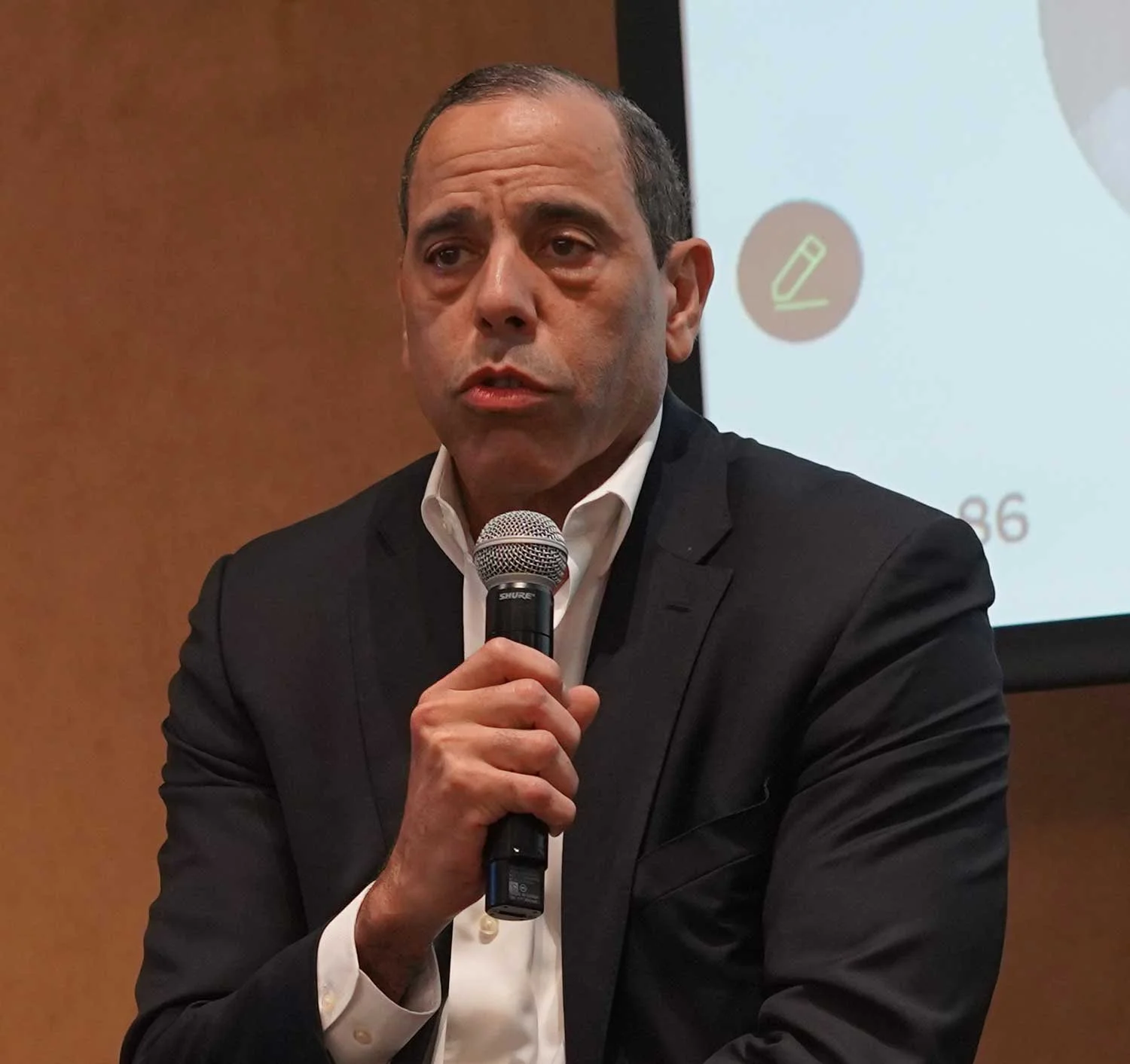
Tony, a former Deputy Secretary at the U.S. Department of Education, described a "chilling effect" across K-12 education spending over the last several years, where the combination of pandemic-era funding cliffs and shifting federal priorities has translated into slower growth generally and made the risk-return calculation less compelling as a result, at least for now. He noted that adult career education, by contrast, remains resilient, as has several niche segments within K-12 (e.g., special education outsourced services).
Anup shared a more personal story: the rise and fall of PosiGen, a solar company that made renewable energy accessible to low- and moderate-income households by developing a novel "green FICO score" based on energy bill payment history. When policy changes froze the solar financing markets, the company lost access to capital and ultimately went bankrupt, taking 750 jobs and 50,000 customer accounts with it. "It was heartbreaking," Anup said. The experience has shifted Activate's thesis toward sectors with less exposure to federal policy risk.
Priya offered an important counterpoint: "The federal government is involved in everything we're all doing." The key, she argued, is backing specialists who watch the regulatory landscape closely and can navigate it better than generalist investors.
The Impact Label in a Changing Climate
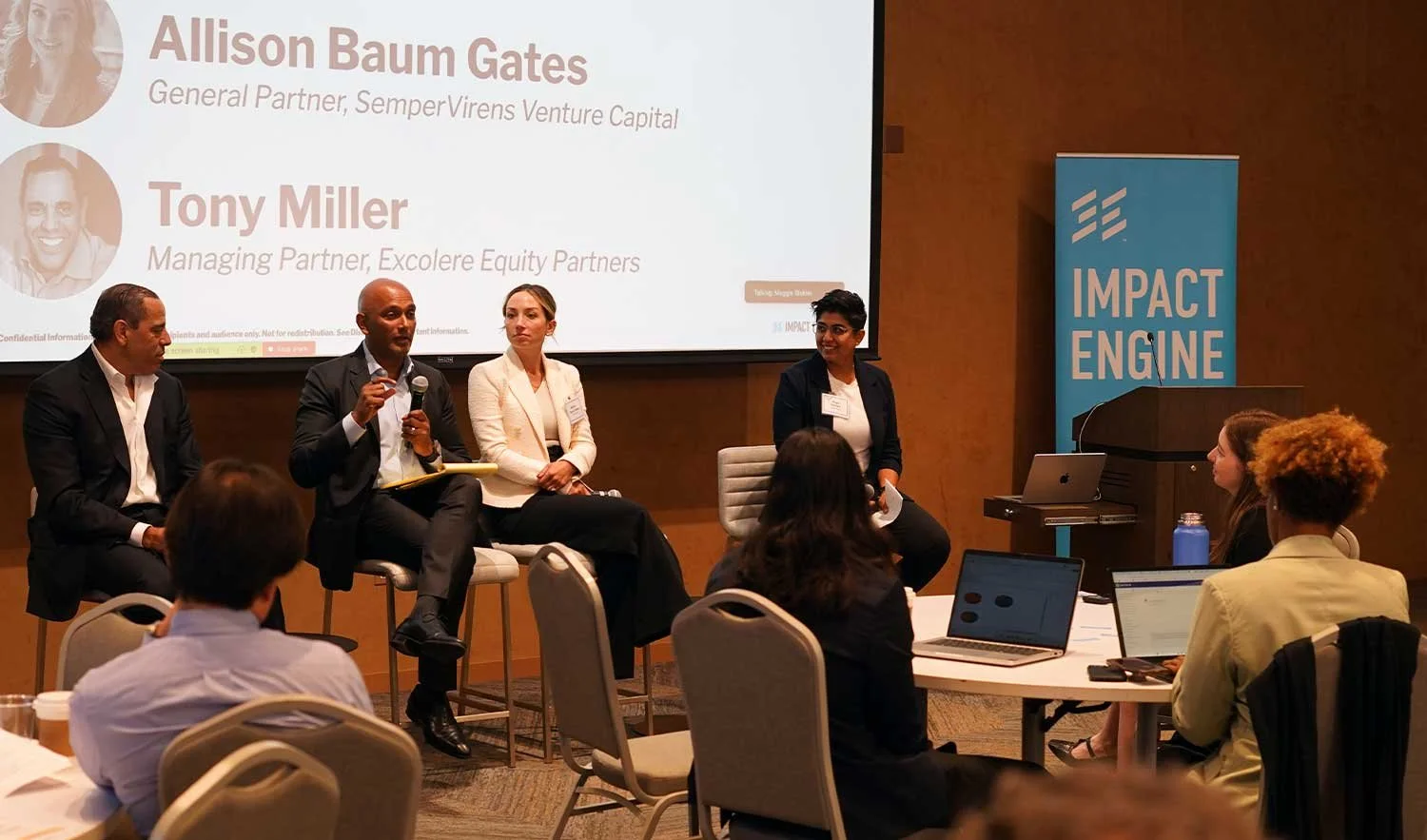
An audience question prompted a frank exchange about whether "impact" has become a liability in fundraising. None of the three funds formally brands itself as an impact fund, and the panelists described an increasingly complex landscape of regional politics, European reporting requirements, and shifting LP expectations around language.
Tony's response cut to the heart of it: in many of Excolere's investments, impact and financial performance are directly correlated. "Higher quality yields better financial performance. It's not a trade-off," he said, describing how an alternative education business generates more revenue precisely because it re-enrolls dropouts and improves graduation rates.
Allison acknowledged the tension more directly, noting that her fund has been advised to remove diversity-related language from its reporting. But she pointed to results: $1B+ companies like Spring Health and Midi Health, founded by women, as the most compelling case for the approach.
Anup revealed that his firm's sustainability reporting has evolved from an "impact report" to a "sustainability report" to one that frames ESG as a risk factor, a progression that reflects the broader industry's shifting vocabulary more than any change in underlying conviction.
The Through Line
Priya closed the panel with a direct message to the room: diversify. "There's no return without risk, and there's no impact without risk either," she said. It was a fitting capstone to a conversation that made clear: impact investing isn't retreating. It's adapting, becoming more specific in its language, more rigorous in its measurement, and more resilient in the face of uncertainty.