





US healthcare spending overall represents 18% of GDP, and improving healthcare utilization by disadvantaged communities is an enormous opportunity to reduce costs and improve patient outcomes.

For impact investors to generate measurable social returns, it’s critical to identify an investment strategy that specifies how the intended social outcome will be achieved.
We align our approach to the framework provided by the Impact Management Project (IMP), which describes 5 dimensions of impact: What, Who, How Much, Contribution, and Risk.
In past blog posts, we’ve written about the next generation of social entrepreneurs in Chicago, why impact entrepreneurship is thriving in Chicago, and the newest players on the Chicago impact scene. Inc.com published a piece recently that said when it comes to social entrepreneurship and building companies with the intention of a greater good, there’s no better place to be than Chicago. Still, we get a lot of questions from investors on the coasts about why we’re based in “flyover country” — as if it’s a disadvantage.
Actually, it’s a point of pride and advantage. Being in Chicago doesn’t prevent us from investing in coastal entrepreneurs (who make up 39% of our current portfolio and, in several cases, held rounds open for us because they valued our participation as a member of their investment syndicate). But we also see a lot of startup companies in between the coasts led by great entrepreneurs with innovative and impactful business models, that get overlooked by investors on the coasts. We think being here means we get the best of both worlds.
We’re always happy to remind people why we love being based where we are.
Booming Tech
Over the last decade, the middle of the country has cultivated a community of thriving tech entrepreneurs and startups. We’ve seen the startup scene transform Chicago, bringing excitement and optimism, renewing our creative culture, and inspiring innovation. As Yazin Akkawi recently wrote, “the entrepreneurial spirit in Chicago has never been more alive…Chicago attracts get-shit-done, no-nonsense leaders.” Steve Case agrees with us: check out Rise of the Rest, his nationwide effort to highlight the work of and invest in entrepreneurs outside of Silicon Valley and NYC. It also doesn’t hurt that operating costs are lower and talent more loyal outside of those markets.
Booming Venture Capital
As the tech startup scene continues to grow, so does the venture capital ecosystem. Hyde Park Angels recently released its 2017 Midwest Startup and Venture Capital Market Analysis, an in-depth and insightful overview of current investment and venture capital trends in the Midwest. Research shows that the Midwest is the biggest venture capital presence outside of California, with Chicago leading the nation with the largest number of exits producing returns over 10x.
Values
Our Impact Engine values include humility, authenticity, and scrappiness — and they could easily be mistaken for “Midwestern” values. When Crowd Companies’ Jeremiah Owyang asked his Midwestern colleagues to share how they define Midwestern values, the three themes that emerged were a strong work ethic, modest integrity and helping others. Researchers from the University of Cambridge analyzed personality traits of 1.6 million Americans and found that the Midwest is the most “friendly” region of the country. We’re always eager to ask “how can I help?” without expecting reciprocation, and we’re deeply passionate about our community. We identify strongly with that approach, and it’s reflected in how we work with our entrepreneurs and investors.
Civic Leadership
It doesn’t surprise us that impact investing is thriving here because Midwesterners have always brought a civic-minded outlook to all aspects of life, and have long been paving the way in activism and civic engagement. From fighting for eight-hour days and fairness, justice and equality at work, to ending corporate greed and poverty, Chicago is considered the birthplace of the American labor movement. Today we’re still moving the needle on human rights and community service. States like Iowa, Minnesota and Illinois allowed same-sex marriage years ahead of New York and California. In a 2009 study on Americans’ volunteering habits, the Corporation for National and Community Service found Midwesterners to be most charitable with their time, with 30.2 percent of people in the region having volunteered in the past year.
In summary, we’re in the best place we could be. The Midwest has all the best ingredients for a thriving social entrepreneurship and impact investing community: a growing tech and venture capital ecosystem, strong values, and a rich history of civic leadership. We’re also a direct flight from a central location to pretty much anywhere else in the country we want to invest or partner. We look forward to working with you to build the impact investing ecosystem, wherever you are!
Last month, Impact Engine hosted breakfast with Richard Muller of Toniic Network, a global action community for impact investors from over 22 countries. Muller shared results from the T100 Project, a multi-year study of the portfolios of Toniic Network members who are committed to investing 100% of their portfolio for impact. The T100 project came out of a need for quantitative and qualitative data as a way to inspire and enable others to accelerate their impact investing journeys as well as to demonstrate a growing market for impact products and services. To date the group has deployed $2.6 billion of $4 billion committed to impact. The study reveals new insights from over 50 portfolios and highlights the various paths towards 100% impact (to read the entire report, click here). Below we’ve shared key takeaways from the report and answer the question: what does 100% impact look like?
“Every investor has to find his or her own way, and be ready to adapt. And when you get to 100%, that is when the real journey starts.” — Toni Johnson, Heron Foundation
100% impact portfolios are achievable today.
Early findings from 51 Toniic portfolios committed to 100% impact are promising: impact investments making up an average of 64% of all portfolios, with one-third of portfolios with over 90% deployed into impact. These impact investments include 36% thematic investments (see below), 19% sustainable investments (investments integrating environmental, social and governance factors into the decision-making process) and 9% responsible investments (investments screened for conflicts or inconsistencies with personal or organizational values, codes of practice, or other impact performance criteria). For thematic investments, Toniic shows the breakdown of the following impact areas on average across portfolios, including 32% environment, 12% poverty alleviation, 9% financial system, and 7% health.

From T100 Launch Report: Insights from the Frontier of Impact Investing 2016.
100% impact portfolios can be constructed across all asset classes.
Another takeaway is that portfolios with 100% impact can extend across asset classes. A breakdown of asset classes shows an average of 29% public equity and 21% private equity investments, as well as 19% fixed income, 15% real assets, 12% cash and equivalents, and 4% hedge funds.
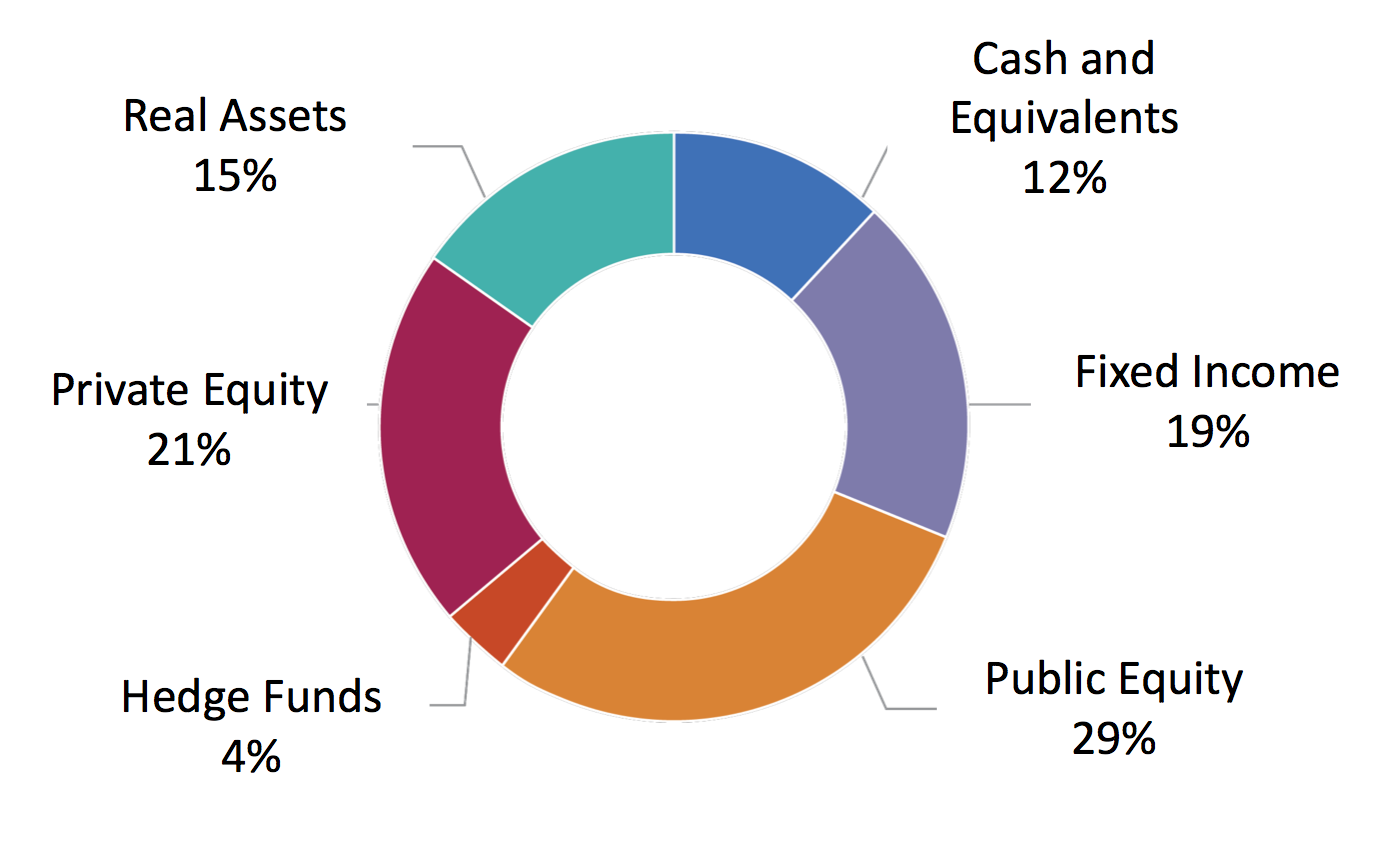
From T100 Launch Report: Insights from the Frontier of Impact Investing 2016.
Impact investors are aligning to the UN Sustainable Development Goals.
Toniic has created an online directory and impact portfolio tool for investors to better understand how their investments address UN Sustainable Development Goals, seventeen goals to end poverty, protect the planet, and ensure prosperity for all as part of the United Nations’ sustainable development agenda. For each Toniic impact area and theme, the platform correlates the investment with a UN sustainable development goal. The next step is using these goals to determine impact measurement metrics for each portfolio investment. Toniic expects to roll out this impact measurement report at the end of Q2 2017.
Both impact and financial return expectations can be met.
Toniic found that most investors (83% overall) expect their portfolios to generate market rate returns, with foundations and high net worth individuals showing more willingness to accept below market rate or capital preservation strategies to generate impact (36% and 14%, respectively). In terms of performance, 83% of participants said that their portfolio met or exceeded financial objectives and 87% said their impact objectives were met.
Impact investing faces challenges…
Muller notes that investing for impact is still an uphill battle. He explains the biggest perceived roadblocks to impact investing are a shortage of quality deals across asset classes, immature impact measurement and a lack of research about the field. The T100 report strives to be the research-backed resource that interested LPs can use to transition their portfolios to impact.
But a supportive community helps.
Toniic believes there are three keys to becoming a successful impact investor. The first is finding a professional, trusted impact advisor to guide you through the process (and in case your advisor is new to impact, we’ve outlined steps to working with your financial advisor to incorporate impact into your portfolio). The second key is having a community of impact investors, friends and family who support your impact portfolio. Impact investing is not a solo journey. At Impact Engine, we know the value of investing as a community and take pride in our network of more than 120 fund investors. The final key to becoming a successful impact investor is personal engagement, another essential component of Toniic’s international community. Through events and comprehensive reports on impact investing, Toniic creates multiple opportunities for investors to engage with its network of impact investors and the portfolio companies they invest in.
While impact investing looks very different from portfolio to portfolio, Toniic has demonstrated that reaching 100% impact is achievable. In the words of Toni Johnson from the Heron Foundation, “every investor has to find his or her own way, and be ready to adapt. And when you get to 100%, that is when the real journey starts.”


